


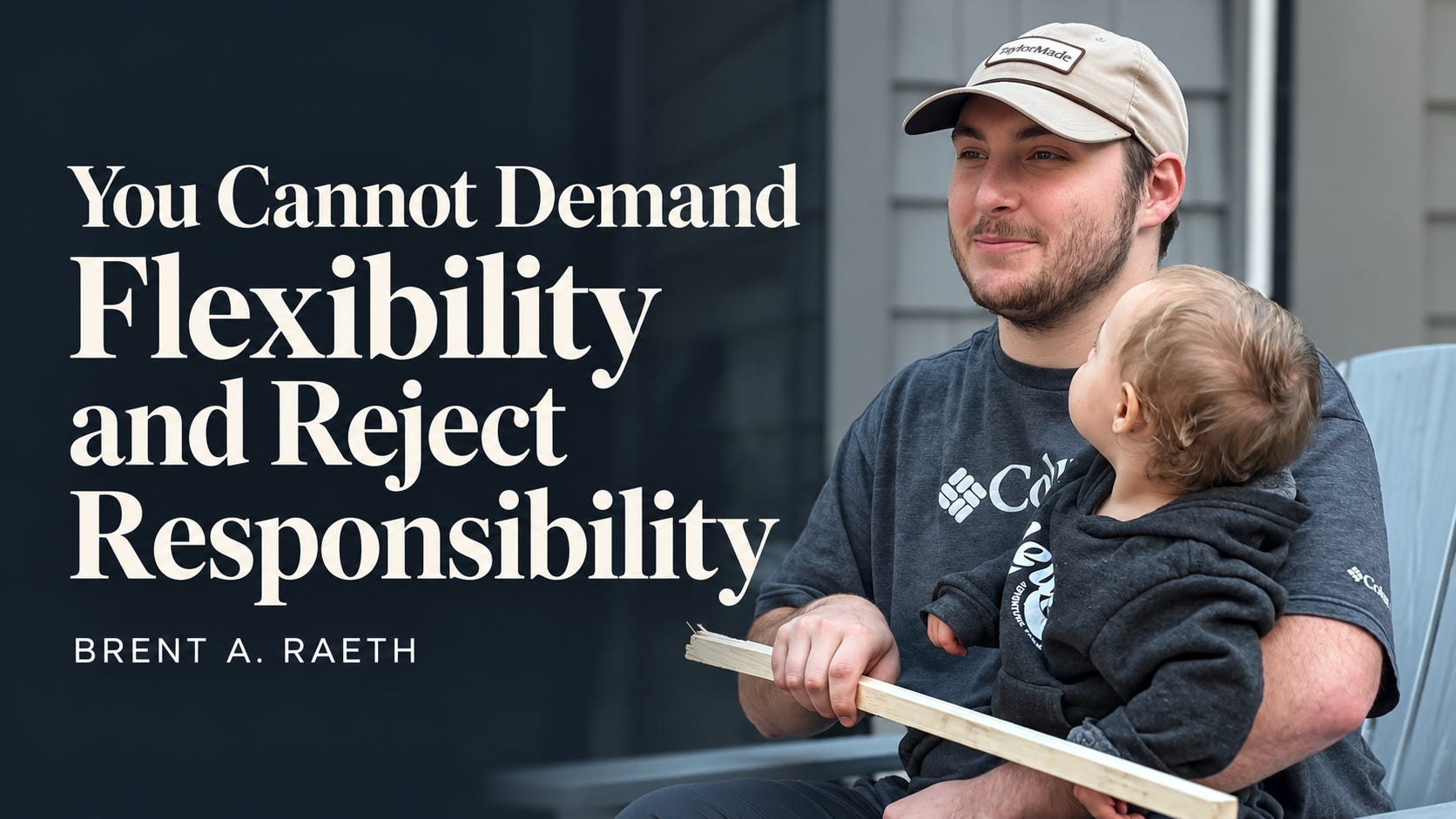
My oldest son, Conner, moved out the summer after graduation, married at twenty, and became a father at twenty-one. Along the way, some family members encouraged me to slow him down. They thought he should have more time before taking on so much responsibility. I did not slow him down.
There were mistakes and difficult stretches. There was also growth. I watched him become more grounded and clearer about his priorities as he took responsibility for his decisions. The independence he wanted came with obligations to other people, and those obligations helped him mature.
My part was to respect his choices and recognize that his life would not necessarily follow the timetable others imagined for him. His part was to work through the responsibilities those choices brought.
I think about that connection when we talk about flexibility. We want room to make choices about our time, our work, and our lives. That is reasonable. But the people affected by those choices still need to know what they can count on.
As a business owner, husband, and father, I believe flexibility matters. People have families, unexpected problems, and responsibilities that cannot always fit neatly around a schedule. A workplace that makes room for those realities can give people the opportunity to contribute well while living a full life. There is nothing irresponsible about asking for a different arrangement.
The responsibility comes in how we handle that arrangement. If I need something to change, I owe the people affected an honest conversation about what that means. What can I still deliver? What needs to move? Who needs information from me to keep their own commitments? Flexibility becomes workable when those questions have answers.
Consider someone who needs to leave work early for a family commitment. A conversation about the afternoon’s responsibilities may be enough to make it work. A teammate knows which customer might call. A deadline gets adjusted with the people involved. Everyone has a reasonable understanding of the plan.
Now consider what happens when that conversation never takes place. A customer calls about something nobody knew was unfinished. Another teammate has to stop their work to find an answer. Someone else’s afternoon changes because they were left to discover a problem they could have helped plan around. The original need may have been entirely reasonable. The way it was handled still matters.
The people willing to help deserve consideration. Over time, repeatedly relying on the same dependable people to absorb the consequences of our choices can wear down the trust that made flexibility possible.
This applies well beyond work. A volunteer who can no longer cover an event gives the organizer a chance to adjust by speaking up promptly. A spouse who needs personal time considers the responsibilities the other person will carry. In each case, our choices take place inside relationships. Our freedom affects someone else’s time.
It is easy to agree with this when we are thinking about other people’s behavior. It becomes more demanding when we apply it to ourselves. I can have a valid reason for needing an adjustment and still handle it poorly. Explaining my circumstances does not automatically resolve the effect on someone else. Responsibility includes being willing to hear that effect without treating the conversation as an attack.
That same standard belongs at the leadership level. If I ask a team to change direction, I owe them clarity about what happens to the work already assigned. Adding a new priority while leaving every old deadline intact can put people in an impossible position. A leader who wants adaptability has to make decisions about capacity and tradeoffs, then accept responsibility for those decisions.
Leaders also owe people clear expectations and enough authority to meet them. Someone cannot reasonably own an outcome while having every meaningful decision withheld. If we say we trust a person to manage their schedule, we need to define the results and coordination the work requires, then give them room to follow through. Constantly changing the standard makes accountability difficult for everyone.
And when someone raises a problem early, our response matters. If every honest conversation becomes a lecture, we make it harder for people to tell us what we need to know. We should be able to discuss a missed commitment directly, understand what happened, and agree on what needs to happen next. Trust grows when both sides can take part in that conversation.
There will also be times when someone cannot provide advance notice or arrange a smooth handoff. A family emergency may leave little room for anything beyond a phone call. A good team helps. People should be able to receive that help without being made to feel guilty for needing it. Shared responsibility includes carrying more when another person temporarily cannot.
The distinction becomes clearer over time. Is someone honest about what they can do? Do they follow through on the agreements they make? When something falls apart, are they willing to address it? Do they consider the people who helped them? Those habits tell us far more than whether a person has ever needed an exception.
Taking responsibility also means being honest about limits. Agreeing to more than we can reasonably do creates promises other people may build their plans around. Sometimes the most responsible answer is that a deadline needs to change or that another commitment must come off the list. Flexibility works best when the agreement reflects what people can actually deliver.
Conner’s experience stays with me because his growth came through taking responsibility for the life he was building. He became clearer about what mattered as he learned what it required of him.
I want room to make decisions in my own life, too. When I ask others to accommodate that freedom, I owe them consideration for their lives. I need to communicate, keep the commitments we agree on, and take ownership when my choices create a problem.
You cannot demand flexibility and reject responsibility. If you want people to make room for your needs, you have to take theirs seriously.