


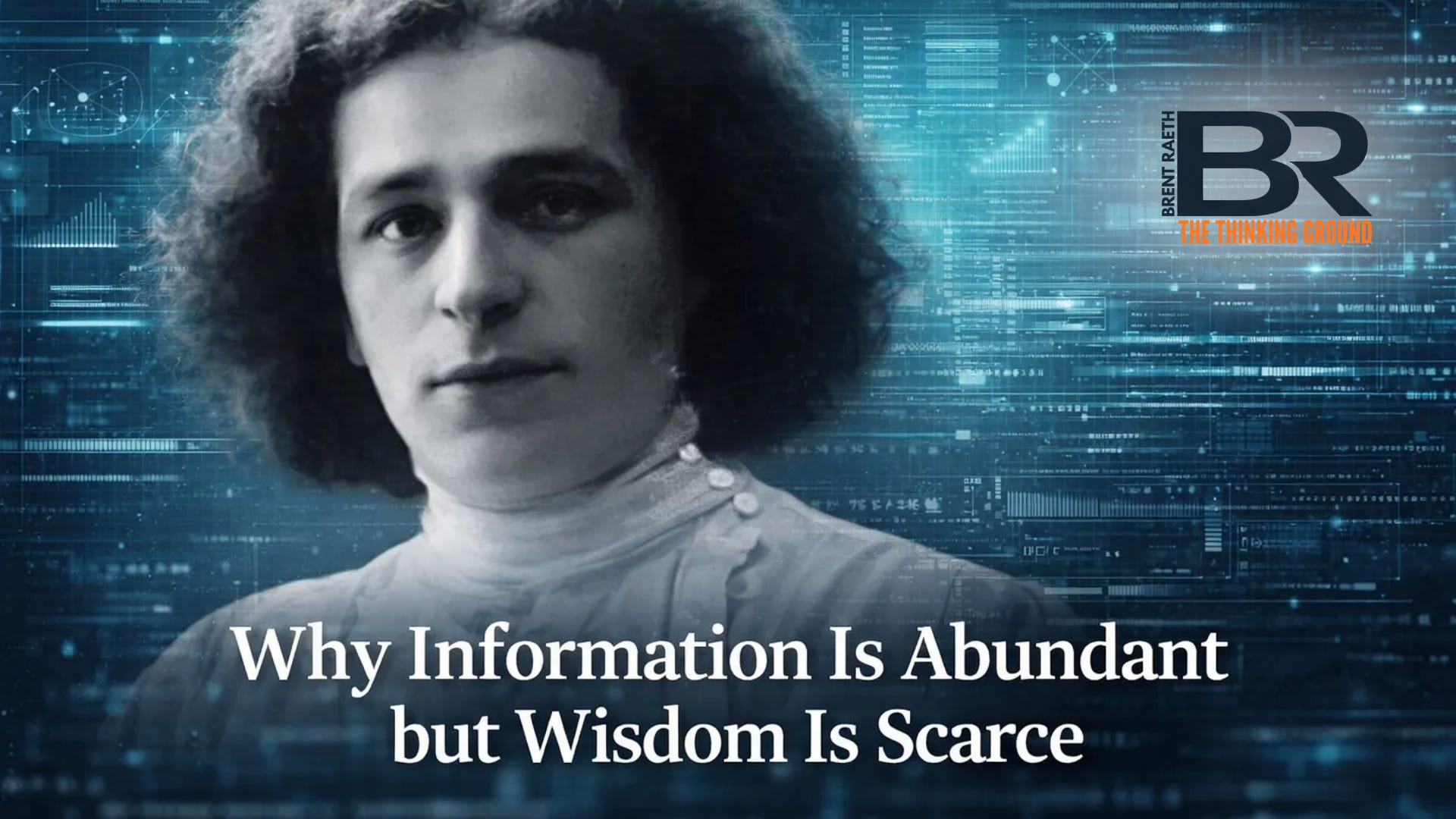
The Man Who Could Remember Everything
In the early 1900s, a Russian journalist named Solomon Shereshevsky became famous for something extraordinary.
During a meeting one day, his editor scolded him for not taking notes. Shereshevsky calmly responded by repeating the entire conversation back word for word. That moment eventually led neuropsychologist Alexander Luria to study him for decades. What researchers discovered was astonishing. Shereshevsky possessed one of the most remarkable memories ever documented.
He could memorize enormous lists of numbers, poems in foreign languages, and long sequences of information with incredible accuracy. Even years later he could recall them without error.
At first glance, this seemed like the ultimate intellectual advantage.
But something unexpected emerged from the research. Despite his extraordinary memory, Shereshevsky often struggled with abstraction and broader meaning. His mind captured every detail so vividly that it became difficult for him to filter what mattered. The flood of information made it harder, not easier, to see patterns, interpret ideas, and grasp higher level concepts.
In other words, he had perfect recall. What he did not automatically gain was wisdom.
In many ways, that story has become a metaphor for our moment.
Because with the rise of artificial intelligence, we are all beginning to resemble Solomon Shereshevsky.
The Solomon Problem in the AI Era
Artificial intelligence has effectively given everyone access to something that looks a lot like perfect memory.
Ask a question and an answer appears instantly. Need a summary of a complex topic? It arrives in seconds. Research, analysis, explanations, and even creative work can now be generated almost immediately.
In a sense, we have outsourced memory itself.
For most of human history, knowledge was scarce. Books were expensive. Libraries were rare. Experts were difficult to access. Learning something complex required years of searching, apprenticeship, experimentation, and study.
Today the opposite is true.
Information is everywhere, and it is instantly accessible.
But removing the barrier to information does not automatically produce wisdom. In some ways, it may actually make wisdom harder to develop.
Information Is Not Understanding
Information and wisdom are not the same thing.
Information answers questions, but wisdom understands context. Information can tell you what happened. Wisdom asks why it happened and whether it matters. Information can provide instructions, while wisdom recognizes when those instructions should not be followed.
AI is incredibly good at generating information. What it cannot replace is human judgment.
Anyone who has spent meaningful time using AI tools has seen this firsthand. Sometimes the answers are excellent. Sometimes they are partially correct. Occasionally they are entirely wrong while still sounding confident and authoritative.
Without wisdom, it becomes dangerously easy to accept an answer simply because it exists.
The Illusion of Competence
Unlimited information creates a subtle illusion. When answers are instantly available, it can feel like we possess the knowledge behind them.
But borrowed answers are not the same as earned understanding.
You see this everywhere. People repeat statistics without understanding the data behind them. They reference frameworks they have never applied. They quote advice they have never tested in real situations.
Information makes it easy to sound informed.
Wisdom requires deeper work.
The Disappearing Role of Friction
One of the most important ingredients in developing wisdom has always been friction.
Historically, learning required effort. You had to search for information, wrestle with difficult material, experiment, fail, adjust, and think deeply before arriving at understanding.
That struggle served an important purpose. It forced the brain to organize information into mental models.
AI removes much of that friction. Answers arrive instantly. While that convenience is powerful, it also means the learning process can easily be skipped. When the struggle disappears, the depth of understanding often disappears with it.
None of this means that AI is a problem. In fact, it is an extraordinary tool that will amplify human capability in ways we are only beginning to understand.
But like any amplifier, it magnifies what already exists. It amplifies shallow thinking just as easily as deep thinking.
The New Scarcity
We are entering a world where information is no longer scarce.
Anyone with a phone now has access to more knowledge than the greatest libraries in history. That means the advantage will not belong to those who simply know things.
It will belong to those who can interpret, question, synthesize, and apply what they learn.
In other words, wisdom becomes the scarce resource.
Solomon Shereshevsky showed the world something fascinating more than a century ago. Even a mind that could remember almost everything still needed judgment to understand what mattered.
Today AI has given all of us a version of Solomon’s gift.
The difference between those who benefit from it and those who are overwhelmed by it will not be access to information. That problem has already been solved.
The difference will be wisdom.