


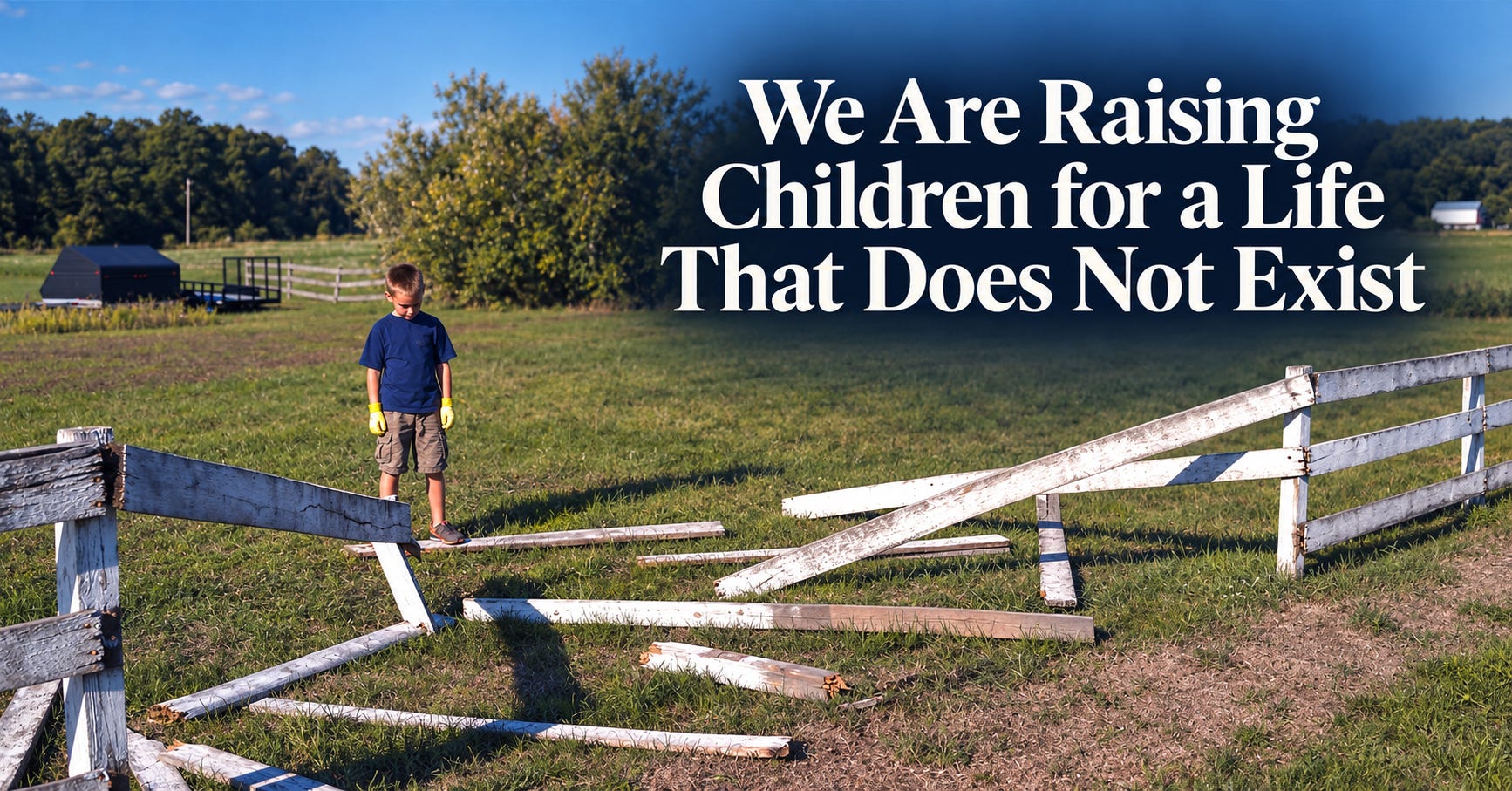
We are preparing too many children for a world that will accommodate their discomfort, recognize their potential without demanding results, and step aside whenever something becomes difficult. That world does not exist. We can delay their encounter with reality, but the delay makes the eventual collision more expensive.
Somewhere along the way, we began treating a difficult childhood moment as a parenting failure. If our children are frustrated, we intervene. If they fail, we challenge the circumstances. If they are disappointed, we look for someone who should have made the experience better. We want them to become confident, capable adults, but we keep interrupting the experiences through which confidence and capability develop.
Then we wonder why adulthood feels overwhelming.
Growth Requires Reaching Beyond Your Current Capacity
Success requires periods of being in over your head. It requires attempting something your present abilities cannot yet deliver, discovering where you fall short, and doing the work to improve. There are responsibilities you learn to carry only after you begin carrying them. There are skills you develop through awkward, unsuccessful attempts. There are limits you cannot accurately understand until you test them.
We increasingly want to circumvent that process. We want achievement without inadequacy, confidence without uncertainty, and resilience without anything difficult to recover from. We want children to experience the rewards of growth while protecting them from the conditions that produce it.
That bargain is unavailable.
Working beyond your current capacity means encountering the edge of what you know how to do. You may need more practice, a better approach, help from someone experienced, or another attempt. The fact that you cannot do something today does not settle what you can become capable of tomorrow. But if every encounter with that limit triggers an adult rescue, you lose the opportunity to discover the difference.
A child who struggles with a demanding assignment needs time to think, attempt, make mistakes, and try again. A teenager who performs poorly needs an honest understanding of what was missing. A young employee who receives correction needs to learn how to use it. Removing the demand may produce immediate relief. It does nothing to build the ability the demand exposed as missing.
Failure Makes the Gap Visible
Failure matters because it makes the gap visible. It reveals the difference between preparation and wishful thinking, between effort and effective effort, between believing you are ready and demonstrating that you are. Failure alone teaches little. Owning it, examining it, and changing your behavior can teach a great deal.
But that process requires us to let the failure stand long enough to learn from it.
Helicopter parenting often prevents exactly that. The parent argues over the grade, negotiates the consequence, manages the disagreement, and supplies the explanation. Each intervention may look loving in isolation. Together, they can establish a pattern in which responsibility belongs to the child only when the outcome is positive.
When things go badly, someone else takes over.
Research gives us reason to question that pattern. A longitudinal study of 422 children linked early overcontrolling parenting with poorer development of emotional regulation and inhibitory control, which were associated with later adjustment difficulties. The study does not prove that parental control alone causes those outcomes, but it reinforces a concern adults should take seriously: managing children too closely can interfere with their learning to manage themselves. Perry and colleagues, Developmental Psychology, 2018
We should also examine whose discomfort we are relieving. Sometimes we intervene because we cannot tolerate watching our children struggle. Their disappointment makes us anxious. Their failure feels like a judgment on our parenting. We fix the immediate situation so everyone feels better, and the child loses another chance to become more capable.
That is a costly exchange.
Social Media Hides the Cost of Success
Social media compounds the problem by surrounding young people with success stripped of its full history. They see the business launch, the acceptance letter, the impressive physique, and the beautiful relationship. They rarely see the repeated rejection, tedious practice, uncomfortable sacrifice, or private repair that helped make those moments possible.
The finished product becomes the expectation. The process becomes invisible.
A young person who has been protected from ordinary struggle can then interpret difficulty as evidence of personal failure. Everyone else appears to be succeeding. Their own experience feels slow, uncertain, and unimpressive. They may abandon something worthwhile because they mistake the discomfort of learning for proof that they do not belong.
We owe them a more honest explanation of success. Much of it involves doing necessary work before you are good at it, staying engaged after the excitement fades, and accepting that your first serious effort may still fall short. Nobody can give you that experience through encouragement alone.
The Consequences Belong to All of Us
Adulthood will eventually impose demands that parental intervention cannot remove. An employer needs the work completed. A customer expects the problem solved. A partner needs accountability. A household requires attention even when everyone is tired. Those responsibilities do not disappear because someone feels unprepared.
The consequences reach beyond the person struggling. Coworkers take on unfinished work. Partners carry responsibilities that should be shared. Families remain on call to manage problems their adult children never learned to handle. Communities lose capacity when too many people expect someone else to absorb the difficult parts.
We all have a stake in whether the next generation can carry responsibility.
That does not mean every young person is unprepared. Many are disciplined, capable, and already carrying substantial burdens. Nor does it mean exhaustion is a virtue or that children should face humiliation, danger, or impossible demands. The challenge should stretch their abilities while leaving room for guidance and recovery. Adults still have to exercise judgment.
But those distinctions cannot become another excuse to eliminate every demanding experience. A standard can be reasonable and still be hard to meet. Feedback can be fair and still hurt. A worthwhile goal can require more effort than someone expected to give.
We need to become comfortable saying so.
Let Them Struggle While the Stakes Are Smaller
Let children attempt work they cannot yet do well. Let them lose honestly. Let them explain a missed commitment, repair a mistake, and earn back trust. Help them understand a poor result before rushing to soften it. Ask what they will change, then give them the responsibility of changing it.
We also need to stop presenting our own success as though it arrived naturally. Tell them about the times we were unprepared, the criticism we needed, the opportunities we lost, and the work required to improve. Show them that struggle belongs inside a successful life.
Our job is to help young people build the capacity to meet reality. That requires opportunities to reach beyond their present abilities, fall short, recover, and return better prepared.
If we keep removing those opportunities, we should stop acting surprised when adulthood exposes the missing preparation. We cannot spend childhood preventing every manageable failure and then expect capable adults to appear on schedule.
The bill for that avoidance comes due. Our children will pay it first, and the rest of us will help cover the cost.