


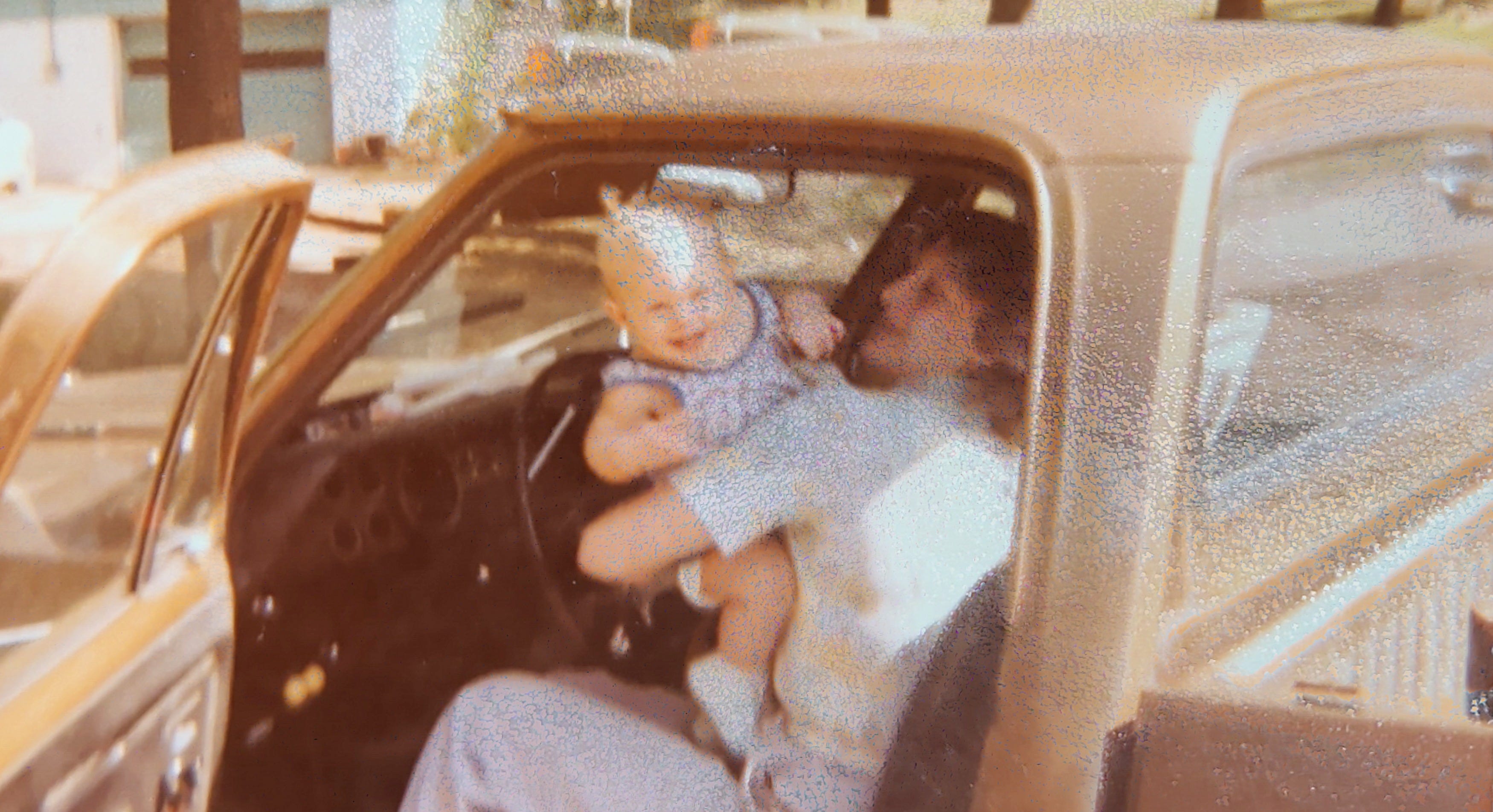
Before anything else, I need to thank my mom.
When she was six years old, she had an adverse reaction to the chicken pox. That reaction led to the amputation of her leg. Most people who are close to our family know she has a prosthetic. What is remarkable is that there are many who have known her for years and are genuinely surprised to learn it.
Over the course of my lifetime, I have never once heard her use her handicap, and yes, she will be upset that I called it that, as a reason not to do something. I have never heard her say she could not try, could not show up, or could not compete. If anything, she was at times recklessly confident that she could do anything.
That stubborn resilience permeated every area of her life. It shaped how she approached work, relationships, parenting, and community. When you grow up watching someone refuse to let circumstances define the ceiling of their effort, that perspective spills over. It becomes normal. It becomes expected. It becomes the lens through which you view challenge.
Having a parent who models that kind of resilience day in and day out is bound to shape the way her children see the world and the obstacles it holds. I thank her for that.
Because of her, I have always believed that most things can be figured out.
That belief sits at the heart of what I see in so many self taught professionals. There is a quiet paradox they carry. Deep confidence in what they can figure out. Deep doubt about whether anyone else will take it seriously.
In meetings, on projects, and across industries, you will find them. Individuals whose work rivals or exceeds that of formally trained peers, yet who quietly question whether their path will be respected because it did not follow a traditional route.
This tension is not imaginary. It reflects the real gap between self directed learning and formal validation systems. Autodidacts teach themselves through curiosity and disciplined problem solving. They set their own goals, test their own understanding, and navigate confusion independently. They fail privately. They rebuild privately. They solve privately.
That process builds real confidence. Not bravado. Not posturing. Confidence rooted in proof. If you have stared at a problem long enough and eventually solved it, you begin to trust your ability to do it again.
Yet traditional institutions do more than impart knowledge. They confer legitimacy. Degrees, certifications, and formal titles act as social signals. They communicate credibility before a single word is spoken.
When someone without those signals walks into a credential driven environment, even the most accurate insight can feel as if it requires extra justification. The doubt that emerges is not about competence. It is about recognition.
This is why the self taught experience often gets mislabeled as impostor syndrome. Classic impostor syndrome is doubt about one’s ability despite evidence of success. The self taught contradiction is different. It is confidence in ability paired with uncertainty about acceptance.
They know they can solve the problem. They just are not sure the room will credit them for it.
Over time, coping patterns emerge. Some over prepare. Some collect certifications not for knowledge but for cover. Some preface their expertise with disclaimers about being self taught. Others stay locked in a perpetual learning race, believing that one more skill will finally quiet the doubt.
But the doubt rarely disappears entirely because it is not rooted in ignorance. It is rooted in structure.
The real shift happens when confidence and doubt are allowed to coexist without canceling each other. Confidence says, I have solved hard problems before. I can do it again. Doubt says, the system of validation was not built around my path. Both statements can be true at the same time.
The most successful self taught professionals are not necessarily those who eventually accumulate enough credentials to feel safe. They are the ones who find or build environments that value contribution over pedigree. They align themselves with cultures that ask, Can you deliver, instead of, Where did you learn.
And perhaps that is where my mother’s influence shows up most clearly.
Resilience does not wait for permission. It does not require applause. It simply moves forward. It figures it out. It adapts. It refuses to let circumstance define outcome.
Watching her live that way normalized something powerful for me. You may not control the starting line. You may not control how others measure legitimacy. But you always control whether you will try, whether you will learn, and whether you will keep going.
The quiet paradox of the self taught is not a weakness. It is the byproduct of forging your own path. Deep confidence born in private effort. Deep doubt born in public systems.
If anything, that tension can be a strength. It keeps arrogance in check while preserving boldness. It fuels preparation without extinguishing courage.
And if you are fortunate enough to have learned resilience at a kitchen table long before you learned it in a boardroom, you understand something essential.
You can figure it out.
Even if not everyone immediately takes it seriously.