


It has been a while since I have been able to sit down and write.
Between work and my involvement with the Muskegon Innovators Summit committee, my schedule has been full. It has been a great experience, but it has also meant that some of my normal rhythms, including writing, have taken a back seat for a bit.
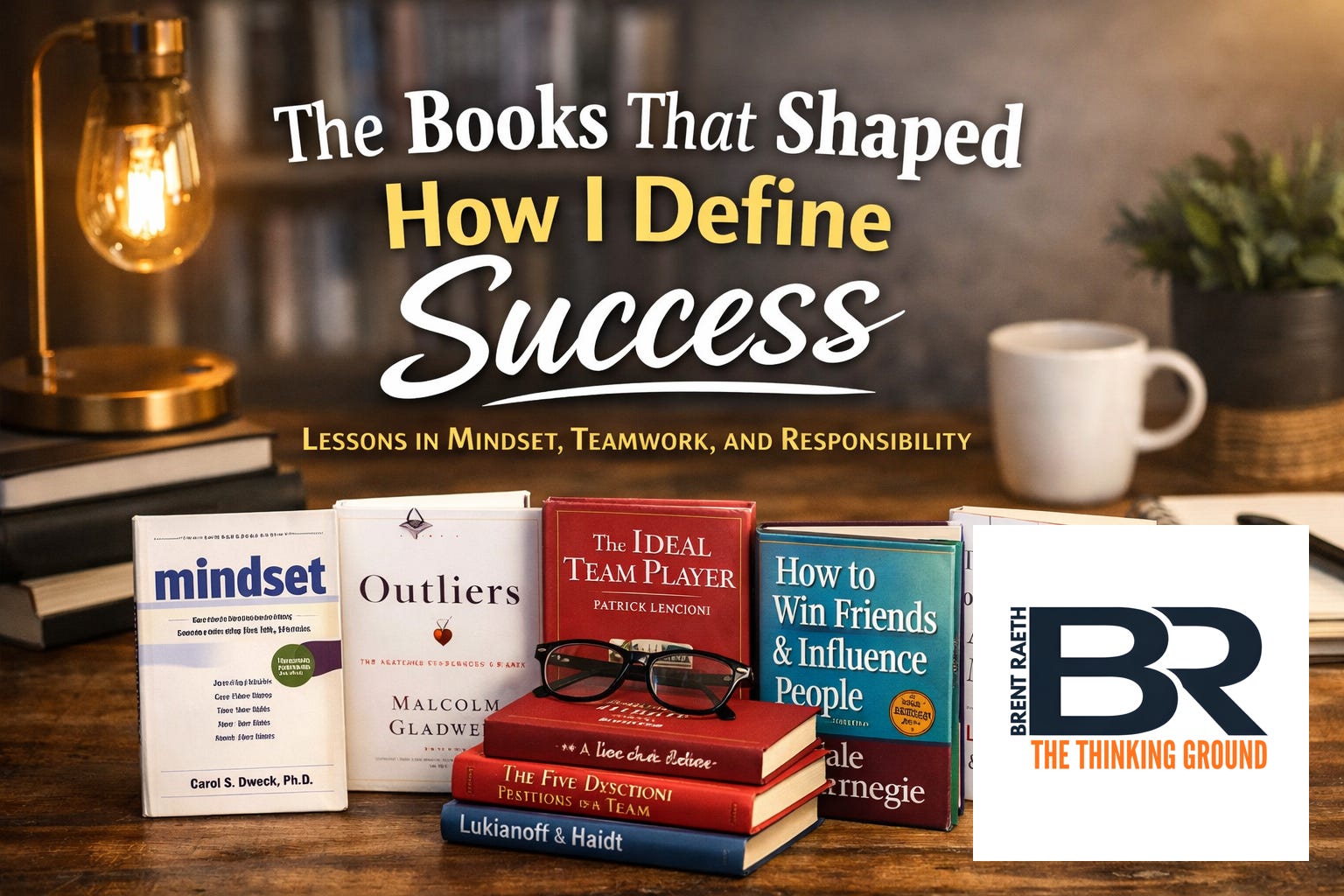
As I have been thinking about getting back into it, I kept coming back to a simple idea. If I had to point someone to a short list of books that have genuinely influenced how I think, lead, and define success, what would be on that list?
These are not just good books. They are books I find myself referencing regularly, whether in business, leadership conversations, or personal reflection.
Here is that list, along with why each one matters.
Mindset by Carol Dweck
At its core, Mindset explores the difference between a fixed mindset and a growth mindset.
A fixed mindset assumes abilities are static. A growth mindset believes they can be developed through effort, learning, and persistence.
This sounds simple, but the implications are significant. It changes how you approach failure, feedback, and challenge. Instead of seeing setbacks as evidence of limitation, you begin to see them as part of the process.
This book reinforced the idea that progress is not about avoiding failure. It is about engaging with it productively.
Outliers by Malcolm Gladwell
Outliers challenges the idea that success is purely the result of individual talent and effort.
Gladwell highlights the importance of timing, opportunity, environment, and consistent practice. The concept of the “10,000 hour rule” became widely known through this book, but the deeper message is more important.
Success is rarely isolated. It is influenced by factors both within and outside of our control.
For me, this book added perspective. It is a reminder to stay humble in success and intentional about creating opportunities for others.
The Ideal Team Player by Patrick Lencioni
This is one of the most practical leadership books I have read.
Lencioni simplifies what makes someone a great team member into three traits. Humble, hungry, and smart.
Humble people put the team first. Hungry people bring drive and initiative. Smart people understand how their actions impact others.
When all three are present, teams function at a high level. When one is missing, problems show up quickly.
This framework has been incredibly useful in hiring, coaching, and evaluating team dynamics.
The Five Dysfunctions of a Team by Patrick Lencioni
This book complements The Ideal Team Player by focusing on how teams break down.
Lencioni outlines five common dysfunctions. Absence of trust, fear of conflict, lack of commitment, avoidance of accountability, and inattention to results.
What makes this book powerful is how clearly it shows that team performance issues are often rooted in behavior and culture, not just strategy or skill.
It has shaped how I think about building teams that are willing to be honest, challenge each other, and stay aligned.
How to Win Friends and Influence People by Dale Carnegie
Despite being written decades ago, this book remains incredibly relevant.
Carnegie focuses on timeless principles. Show genuine interest in others. Listen more than you speak. Avoid unnecessary criticism. Make people feel valued.
None of these ideas are complicated, but they are often overlooked.
In leadership and business, relationships matter. This book reinforced that influence is not about control. It is about connection and trust.
The Coddling of the American Mind by Greg Lukianoff and Jonathan Haidt
This book takes a different angle, focusing on cultural and psychological trends that impact how people think and respond to challenges.
It highlights three “untruths” that have become more common. That what does not kill you makes you weaker, that you should always trust your feelings, and that life is a battle between good people and bad people.
The authors argue that these ideas, while often well intentioned, can lead to fragility and poor decision making.
For me, this book was a reminder of the importance of resilience, critical thinking, and the ability to engage with difficult ideas without shutting down.
How These Books Shape My Definition of Success
Each of these books approaches growth and success from a different angle.
Mindset focuses on how we think.
Outliers highlights the role of opportunity and environment.
Lencioni’s work emphasizes teamwork and accountability.
Carnegie reinforces the importance of relationships.
Lukianoff and Haidt challenge us to think more critically and build resilience.
When you put those ideas together, a pattern starts to emerge.
Success is not just about individual achievement. It is not just about results. It is about how you grow, how you contribute, and how you impact others along the way.
Over time, that has led me to a simple definition of success:
Help people.
Solve problems.
Be a great teammate on better teams.
That definition is not complicated, but it is not easy either.
It requires a willingness to keep learning. To take responsibility. To engage with others honestly. To prioritize the team over individual recognition. And to stay focused on creating real value.
These books have played a role in shaping that perspective. More importantly, they continue to reinforce it.
If you are looking for a place to start, you could do a lot worse than this list.