


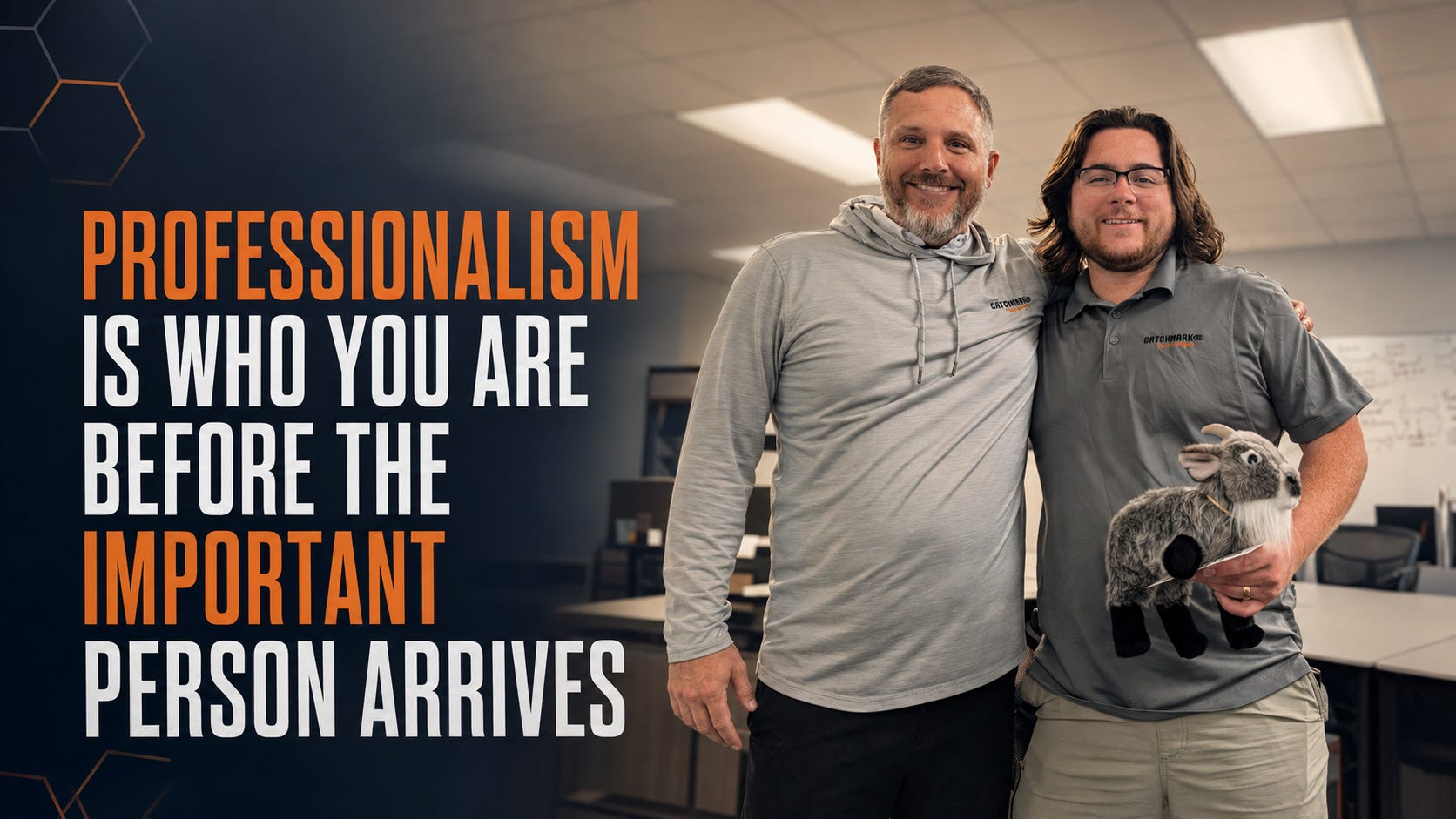
Recently, we were preparing for an important visitor.
We wanted to put our best foot forward. Desks needed to be straightened. Common areas needed attention. Clothing needed to reflect the significance of the meeting. We wanted the office and the team to represent the quality of the business we have spent years building.
There is nothing wrong with that.
Important moments deserve preparation.
But the experience made me consider a more difficult question:
Why do our standards sometimes rise only when someone important is watching?
The Visitor Did Not Create the Standard
An important customer, investor, partner, or potential buyer can sharpen everyone’s attention.
Suddenly, we notice the stack of papers that has been sitting in the corner. We pay closer attention to how we greet people. We choose our words more carefully. We arrive a little earlier and present ourselves a little better.
The visitor did not create those standards.
The visitor revealed that we were capable of meeting them all along.
That is the part worth examining.
If an organized workplace communicates competence on an important day, it communicates competence on an ordinary day too. If professional clothing demonstrates respect during a major meeting, how we present ourselves during routine interactions also matters. If responsive communication is essential for a valuable prospect, it is also essential for the customer who has trusted us for ten years.
Professionalism should not be a performance we activate for powerful people.
It should be the ordinary expression of who we are.
Small Things Communicate Larger Truths
People often dismiss the details as superficial.
Does a clean workspace really make someone better at their job? Does what a person wears determine the quality of their thinking? Does answering an email promptly prove that someone cares?
Not by themselves.
But small behaviors communicate larger attitudes.
They show whether we pay attention. They show whether we understand that other people form judgments from what they can observe. They show whether we respect our shared environment and the people who enter it.
Professionalism is not about pretending appearance matters more than substance.
It is about making sure our visible habits do not contradict the substance we claim to possess.
An organization cannot credibly say that details matter for customers while ignoring details internally. It cannot claim to value responsiveness while normalizing unanswered messages. It cannot promote excellence while accepting carelessness whenever the stakes appear low.
Culture is built in those apparent low-stakes moments.
Standards Matter Most When Nobody Is Inspecting Them
Anyone can improve their behavior while being evaluated.
The deeper test is what happens on an ordinary Tuesday when there is no visitor, no presentation, and no obvious reward for doing things well.
Do we still prepare?
Do we still communicate clearly?
Do we still treat teammates and familiar customers with the same attention we would give someone who could change the future of the company?
Character is often described as what we do when no one is watching. Professionalism works the same way.
The strongest professionals do not need a special audience. Their standards come from identity rather than inspection.
They do quality work because they are people who do quality work.
This Is Not a Demand for Perfection
An organization is a place where human beings work.
Desks will occasionally become cluttered. Communication will sometimes be delayed. People will have difficult mornings, make mistakes, and fall short of the standard.
Professionalism does not require creating a sterile workplace in which everyone is constantly performing.
It requires caring enough to notice when temporary disorder is becoming a permanent habit.
There is an enormous difference between having an imperfect day and accepting an undisciplined culture.
Leaders must also be careful not to enforce visible standards while ignoring deeper ones. A clean office cannot compensate for poor service. A collared shirt cannot overcome weak character. A polished presentation cannot repair a lack of competence.
The goal is alignment.
What people see should support what the organization says it values.
Use the Important Visit as a Mirror
Preparing for an important visitor can be healthy. It gives a team a reason to reset, look at the environment with fresh eyes, and consider what it communicates.
But after the visitor leaves, we should not immediately return to a lower standard.
We should ask what the preparation revealed.
What did we fix that should remain fixed? What behavior did we expect because the day mattered? Why would that behavior not matter tomorrow?
The most impressive organizations are not impressive because they can stage one excellent afternoon.
They are impressive because the afternoon looks like them.
They are prepared before the important person arrives.
They remain professional after that person leaves.
And they treat the people who walk through the door every day as though they matter too.