


It is easy to feel at peace when everything is working. The bills are paid, the people around you are happy, work is moving forward, and the future looks reasonably predictable. In those moments, we might believe we have finally learned how to handle life.
Then something changes. A conversation goes poorly. A customer leaves. Someone makes a decision we would not have made. A plan we invested months in suddenly becomes uncertain. The calm disappears, and we discover how much of it depended on circumstances cooperating.
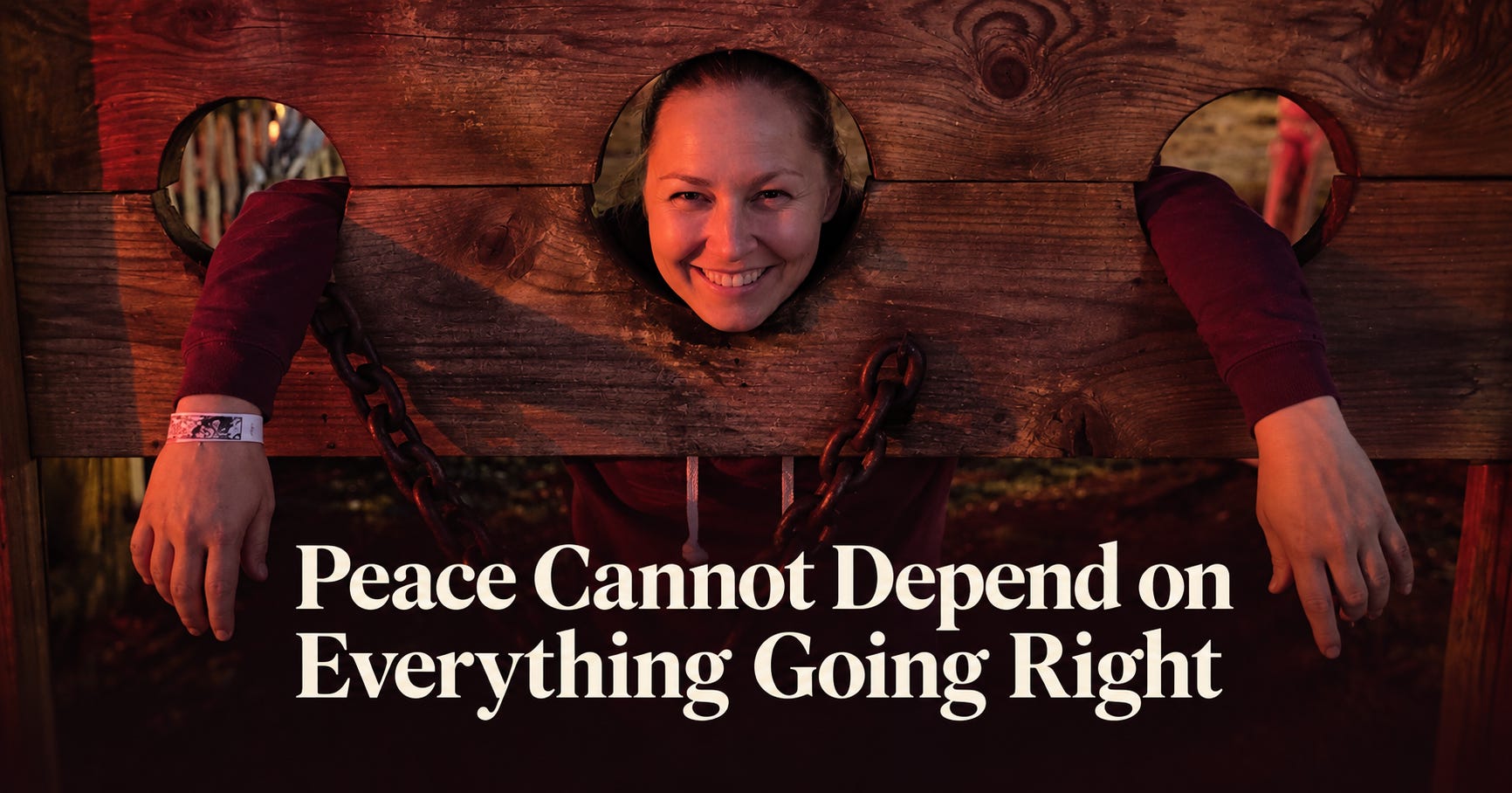
A quote I recently came across put that tension into words: “If your peace depends on everything going right, that’s not peace, that’s control.”
That is a challenging thought, especially for people who take responsibility seriously. When you are accustomed to solving problems, anticipating risks, and helping others, control can feel like part of the job. You prepare because preparation matters. You establish expectations because clarity helps. You follow through because people depend on you.
The difficulty begins when you expect those efforts to eliminate uncertainty.
Preparation can improve your chances. It cannot guarantee the outcome. Clear communication can help someone understand you. It cannot determine how they respond. You can make a thoughtful decision with the information available and still face a result you did not want.
There is no amount of competence that makes us exempt from disappointment.
When Responsibility Becomes a Demand for Certainty
The desire for control often shows up in ordinary ways. We check for a response one more time. We replay a conversation, looking for the sentence that would have made it go differently. We step into someone else’s responsibilities because watching them approach a task differently makes us uncomfortable.
Each action can seem reasonable on its own. Together, they can create a life in which we are always monitoring, correcting, or waiting for something to be settled before we allow ourselves to relax.
I think this is especially difficult in leadership. We are responsible for results, and our decisions affect other people. There are legitimate reasons to pay attention. But we can quietly begin to believe that caring enough means worrying constantly, or that being responsible means personally preventing every possible failure.
That expectation is impossible to meet. It also changes how people experience us. A leader who needs every detail to unfold exactly as expected can make honest updates difficult to deliver. People may spend more energy managing the leader’s reaction than addressing the problem.
Steadiness gives those conversations room to happen. We can acknowledge that something went wrong, ask useful questions, and hold people accountable without allowing frustration to take over the room.
Making Room for an Uncomfortable Reality
Remaining steady does not mean you feel nothing. You can be disappointed, angry, concerned, or sad and still choose a thoughtful response. Sometimes peace looks less like feeling calm and more like refusing to let a difficult feeling make the next decision.
There is also a difference between accepting reality and approving of it. Accepting that a situation exists allows you to address it. You can challenge a decision, establish a boundary, leave an unhealthy situation, or work to correct a problem. None of those actions requires pretending that everything is fine.
What drains us is the additional argument we have with reality: This should not be happening. They should understand by now. After everything I have done, this should have worked.
Those thoughts are understandable. But eventually, we have to decide what comes next. The situation in front of us needs a response, even when it is not the situation we believe we deserve.
Practicing Steadiness
A useful place to start is with a simple question: What is mine to do here?
That question brings attention back to something practical. Perhaps you need to make a phone call, clarify an expectation, apologize, or gather better information. Perhaps you have already done what you can, and the next step belongs to someone else.
Recognizing that distinction takes practice. Sending a clear message is your responsibility. Forcing an immediate reply is beyond your control. Giving someone guidance is within your reach. Making every decision for them prevents them from learning. Preparing for a difficult meeting is useful. Rehearsing every possible disagreement late into the night may leave you less prepared to listen.
Sometimes the most disciplined thing you can do is stop intervening.
It also helps to separate what you know from what you fear. An unanswered message can quickly become a story about disrespect. A setback can become a prediction that everything is falling apart. Before responding, ask whether you are dealing with the facts or with the meaning you have attached to them.
Then choose the next useful action. You do not need to resolve the entire future to handle the next conversation well.
A Life That Can Hold Uncertainty
If we keep postponing peace until every problem is resolved, we will spend much of our lives waiting. There will usually be an unanswered question, an unfinished responsibility, or someone we care about facing something we cannot fix.
We still need to plan, work, and care deeply. We also need to leave room for life to unfold differently than we hoped.
Growth becomes visible in those moments. You hear disappointing news and take a breath before responding. You let someone own a decision. You have the difficult conversation without demanding that it end in agreement. You enjoy an evening with your family while a work problem remains unresolved.
None of that guarantees an easier tomorrow. It allows you to be present today.
The goal is to build enough trust in your judgment, your values, and your ability to respond that uncertainty does not have to consume you. You may not know how everything will turn out. You can still decide how you will show up.
You do not have to know that everything will be okay to meet this moment well.