


I recently tried to help a teammate get better at their job, and it did not go the way I expected.
This teammate is capable, intelligent, and clearly wants to succeed. But there
were repeated mistakes showing up in their work. Not catastrophic failures, just patterns. The kind that, if left unaddressed, eventually become bigger problems. So I did what leaders and teammates have done for generations. I pulled them aside privately and offered corrective feedback.
I was calm. Specific. Respectful. I explained what I was seeing, why it mattered, and how I thought they could improve. There was no raised voice, no public embarrassment, no personal attack. Just a straightforward conversation aimed at helping them grow.
They did not hear it that way.
Almost immediately, their posture changed. Defensiveness replaced curiosity. The feedback was reframed as criticism. The intent was questioned. Before long, the conversation was no longer about the work at all. It was about how they felt. They were upset. Hurt. Frustrated that anyone would point out something that was not working.
What struck me was not the emotion itself. Feedback can sting. That is normal. What struck me was the complete absence of resilience. There was no pause to consider whether the feedback might be valid. No questions about how to improve. Just an emotional wall that shut down the entire purpose of the conversation.
That moment revealed something important. Feedback does not fail because people dislike being corrected. Feedback fails when it arrives without a solid foundation of trust for it to rest on.
In the past, correction was understood as part of becoming competent. Someone pointing out a flaw was seen as invested, not hostile. Discomfort was accepted as temporary and necessary. You absorbed the feedback, adjusted, and moved forward stronger.
Today, that shared understanding no longer exists by default.
Modern leaders operate in an environment where authority is suspect and intentions are often assumed to be negative. Coaching is easily confused with control. Accountability is mistaken for personal attack. In that climate, even well-delivered feedback can feel unsafe if the relationship has not been carefully built beforehand.
This reality means leadership now demands more than technical skill or positional power. It requires trust, earned slowly and intentionally. Leaders have to work harder and be better to create the conditions where feedback can actually take root.
Trust is not built in the moment of correction. It is built long before it. It grows through consistency, fairness, and presence. It develops when leaders listen without immediately fixing, follow through on commitments, admit mistakes, and hold themselves to the same standards they expect of others. These moments create credibility. They create safety.
When trust is present, feedback still stings, but it does not threaten identity. It can be considered rather than rejected. It becomes information instead of accusation.
That does not mean leaders should avoid hard conversations until conditions are perfect. Growth still requires honesty. Standards still matter. The difference is that modern leaders must recognize that truth travels best across relationships that have already proven their intent.
Leadership today is not easier than it used to be. It is more relational. It requires empathy without abandoning expectations, care without coddling, and courage without cruelty. Leaders must be willing to invest deeply enough that their words can be heard when it matters most and even if they sting.
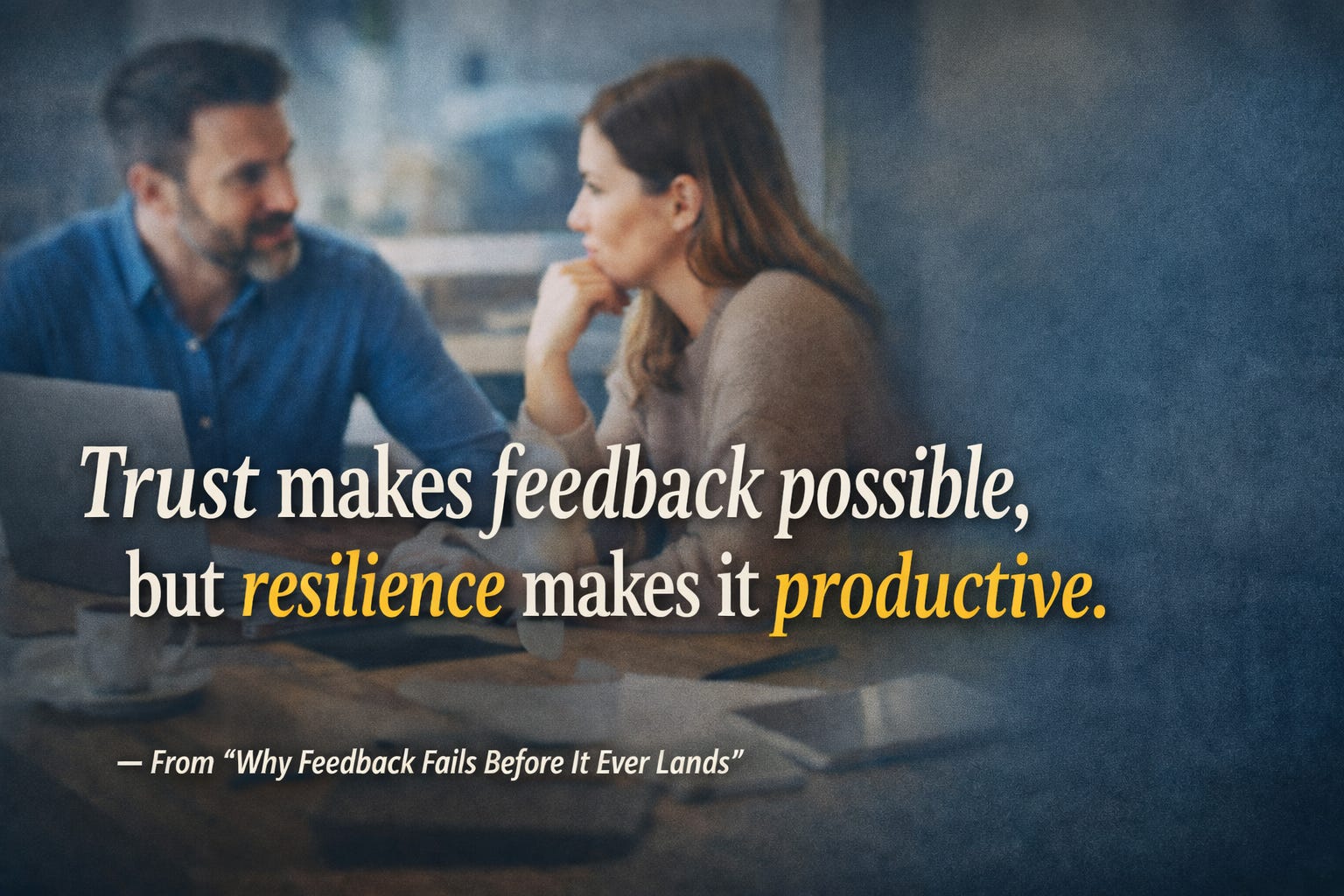
At the same time, growth remains a shared responsibility. Teams cannot thrive if individuals are unwilling to experience discomfort or examine their own performance. Trust makes feedback possible, but resilience makes it productive.
Feedback is not the enemy. Done well and received well, it is one of the clearest signs that someone believes you are capable of more. But without trust, even the best feedback cannot grow. It simply bounces off hardened ground and leaves everyone frustrated.
Real progress happens when leaders earn the right to speak honestly and when teammates are willing to listen. That is where improvement begins.