


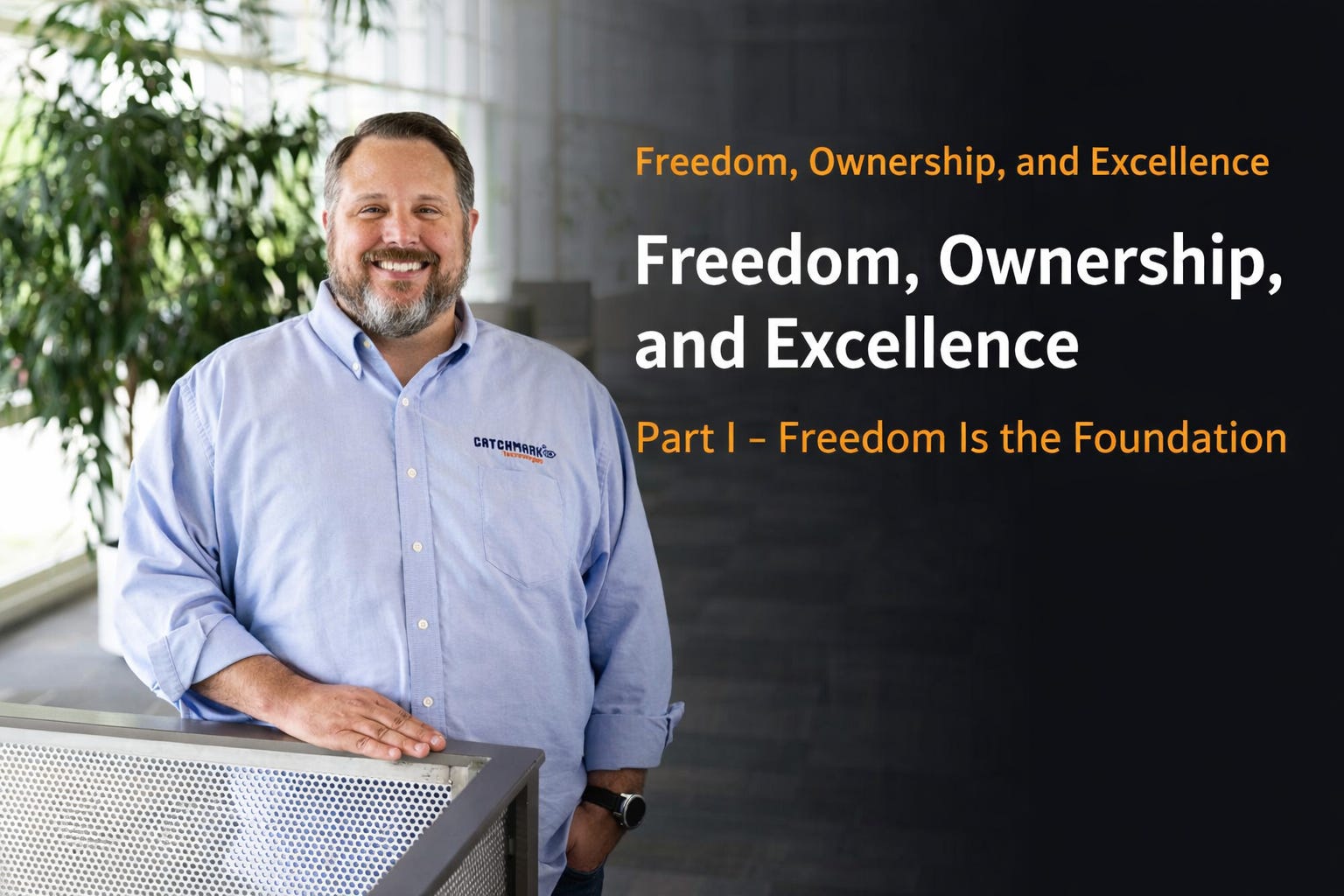
A few years ago, I was sitting in a leadership conversation where someone said, “People just need more freedom.”
I agreed.
But I also knew something they did not say out loud.
Freedom without ownership is not freedom. It is drift.
This article begins a series outlining my philosophy of leadership. It is not academic. It is not theoretical. It has been shaped by leading teams, building companies, serving on boards, raising sons, and carrying the weight of decisions that affect other people’s livelihoods.
If I had to summarize the entire philosophy in one word, it would be this:
Freedom.
But freedom properly understood.
The Series
Over the next several articles, I am going to lay out the principles that guide how I lead:
Freedom as the foundation
Accountability over excuses
Culture built on what you tolerate
Craftsmanship as a moral obligation
Leadership as stewardship
Resilience through exposure
Strategy through clarity and courage
Building something that outlives you
They are connected. Each builds on the other. But none of them work without the first.
Freedom Is Not Comfort
We live in a time where freedom is often confused with comfort.
Freedom does not mean the absence of standards.
Freedom does not mean the absence of consequences.
Freedom does not mean protection from outcomes.
Freedom means you are trusted to decide.
And you are responsible for what happens next.
In organizations, this is where many leaders falter. They say they want empowered teams, but what they really want is controlled autonomy. They want initiative, but only if it produces predictable results. They want ownership, but not if it leads to visible mistakes.
That is not freedom.
That is curated permission.
True freedom in an organization means:
Clear expectations
Defined outcomes
Guardrails that protect mission and values
Autonomy inside those guardrails
When those elements are present, adults can act like adults.
When they are absent, you either get chaos or micromanagement. Sometimes both.
Freedom Requires Ownership
Here is the part that makes freedom uncomfortable.
If you want freedom, you must accept the outcome of your decisions.
That is true in business.
It is true in leadership.
It is true in life.
You cannot demand autonomy and then outsource responsibility when results fall short.
One of the cultural toxins I work hard to eliminate is excuse language. Not because I lack empathy. Circumstances matter. Context matters. Life happens.
But results do not care about your reasons.
Ownership is not about blame. It is about control.
The moment you say, “This is mine,” you gain power. You move from victim to agent. From reactor to builder.
Teams that embrace ownership move faster. They fix problems without waiting. They improve systems instead of defending them.
Teams that avoid ownership become explanation factories.
And explanation factories never build anything great.
Leaders Must Model It First
This philosophy only works if the leader goes first.
If I expect ownership from my team, I must demonstrate it publicly.
When we miss a target, I absorb the responsibility.
When we make a strategic error, I own the decision.
When communication fails, I correct it.
Privately, we refine. Publicly, I carry the weight.
That is the cost of leadership.
Freedom flows downward when ownership flows upward.
If leaders deflect, teams will rationalize. If leaders justify, teams will excuse. Culture mirrors the top.
Adults, Not Dependents
I have strong convictions about adulthood.
Modern culture increasingly treats grown people as if they are fragile dependents who must be shielded from friction. In families. In schools. In workplaces.
That instinct often comes from care.
But overprotection cripples.
In an organization, treating adults like dependents produces one of two outcomes:
Passivity
Entitlement
Neither builds strength.
When you give capable people real responsibility, something powerful happens. They grow into it. They surprise themselves. Their confidence becomes earned, not inflated.
Confidence that is earned through responsibility is durable.
That is the kind of culture I want to build.
Freedom With Guardrails
Freedom without standards is chaos.
Standards without freedom is bureaucracy.
Healthy leadership lives in the tension between the two.
At CatchMark, that means:
Clear strategic priorities
Measurable outcomes
Transparent expectations
Direct feedback
Real consequences, good and bad
Inside that structure, I want initiative. I want creativity. I want decisive action.
If everything must be approved, we are too controlled.
If nothing is accountable, we are too loose.
Freedom requires intentional structure.
The Point
If you remove everything else from my leadership philosophy, keep this:
Freedom is the highest value. But freedom without ownership destroys culture.
If you want a strong team, build adults.
If you want adults, give them responsibility.
If you give them responsibility, hold them accountable.
If you hold them accountable, model it yourself.
That is the foundation.
Leadership is not about control.
It is about creating an environment where free people choose to carry weight.
And then actually do.
Next
In the next article, I will go deeper into the difference between accountability and excuse culture, and why high performers rarely explain while low performers almost always do.