


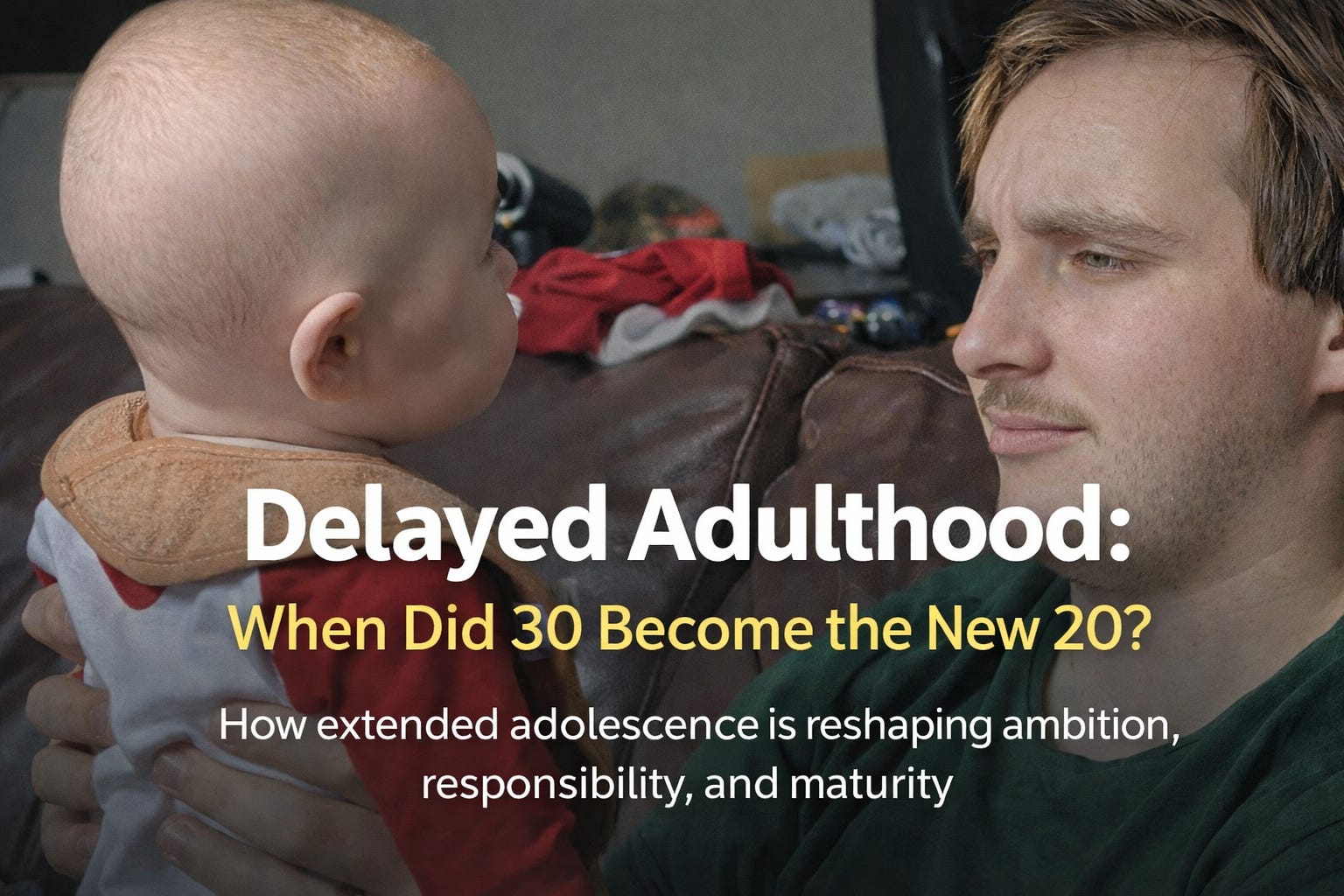
He had this restless independence about him. He wanted to make his own decisions. He pushed back. He asked for responsibility. He was impatient with childhood.
At first, I saw it as a problem. As a dad, my instinct was to slow him down. Protect him. Stretch out the runway. There is comfort in keeping your kids close and safe. There is a quiet fear in watching them step into risk.
But over time, I began to see something different. That independence was not rebellion. It was wiring. It was ambition. It was a desire to build.
The summer after he graduated, Conner moved out. At 20, he got married. At 21, he made me a grandfather.
Many people in my life, including family members who typically champion independence, subtly encouraged me to slow him down. “What is the rush?” “He is so young.” “Let him enjoy his twenties.”
I did not slow him down.
There were mistakes. Real ones. There were seasons of pandemonium. Financial pressure. Emotional stress. Moments where I wondered if the critics were right.
And yet today, as I look at his life, I have a hard time arguing for the culturally accepted model of delayed adulthood that our society now preaches. In many ways, he is far ahead of his peers. Not because he avoided hardship, but because he embraced responsibility early.
That got me thinking.
When did we decide that 30 is the new 20?
The Rise of Delayed Adulthood
Fifty to eighty years ago, it was common for 18, 19, and 20 year olds to be fully immersed in adult life. They worked full time. They started families. They bought homes. They carried responsibility.
Today, we have normalized a very different timeline.
Extended adolescence has become standard. Four to six years of college. Sometimes more. Graduate school. Gap years. Serial job hopping framed as “finding myself.” Living at home into the mid or late twenties. Delaying marriage. Delaying children. Delaying commitment.
We have culturally moved the starting line.
Thirty has quietly become the new twenty.
Some of this shift is structural. Education is more expensive. Career paths are more complex. Housing costs have risen. The digital economy has changed how we work.
But some of it is philosophical.
In The Coddling of the American Mind, Greg Lukianoff and Jonathan Haidt argue that we have embraced what they call “safetyism,” the belief that emotional safety must be prioritized above almost all else. They summarize the cultural drift with three “Great Untruths,” including: “What doesn’t kill you makes you weaker.”
That line should stop us.
If we begin to believe that hardship is inherently damaging rather than developmental, we will naturally delay exposure to it. We will pad the runway. We will intervene. We will protect.
And in doing so, we may unintentionally delay adulthood itself.
We have elevated comfort over responsibility. Experience over contribution. Exploration over commitment.
And we have sold young adults the idea that prolonged flexibility is always superior to early responsibility.
What This Has Done to Ambition
Ambition used to be closely tied to assumption of responsibility.
You wanted to provide. So you worked.
You wanted to build something. So you committed.
You wanted independence. So you left home and figured it out.
Now ambition often expresses itself differently. It is framed as personal optimization. Travel more. Sample more. Keep options open. Avoid being “tied down.”
But options without ownership can quietly dull ambition.
Responsibility sharpens a person. When a spouse is depending on you. When a child is depending on you. When rent is due and your name is on the lease. When failure is personal, not theoretical.
That pressure forces growth.
When adulthood is delayed, so is that sharpening.
We have created a culture where many twenty five year olds are still waiting for permission to begin. Waiting for certainty. Waiting for the perfect opportunity. Waiting until they “feel ready.”
The problem is that maturity rarely precedes responsibility. It follows it.
What This Has Done to Maturity
Maturity is not age. It is weight carried well.
When society delays weight, it delays maturity.
If the primary expectation of your twenties is self exploration, the muscle of sacrifice develops later. If your primary responsibility is to yourself, empathy and endurance grow more slowly.
Lukianoff and Haidt warn that “preparing young people for life means gradually exposing them to challenges, letting them experience manageable amounts of stress, and helping them learn from failures.” That principle applies far beyond campus speech debates. It applies to life design.
If we shield young adults from difficulty well into their twenties, we should not be surprised if resilience arrives later as well.
This does not mean young adults today are weak or incapable. Many are incredibly talented and driven. But culturally, we have lowered the expectation of early adulthood.
We have normalized fragility. We overprotect. We intervene. We smooth every rough edge. Parents manage problems that used to be solved by the young adult themselves.
In trying to make the road easier, we have extended it.
Contrast that with Conner’s experience. Marriage at 20. Fatherhood at 21. Financial pressure. Relational conflict. Hard conversations. Real consequences.
It was messy. But it was maturing.
The same people who warned me he was moving too fast often now comment on how grounded he is. How focused. How clear about his priorities.
Responsibility did not ruin his youth. It refined him.
The Cultural Trade Off
To be fair, early adulthood is not a formula. There are real advantages to education, travel, and thoughtful preparation. Recklessness is not maturity. And not every nineteen year old is ready for marriage and children.
But we should at least ask what we are trading.
When we tell an entire generation that their twenties are for experimentation rather than contribution, we shift the cultural center of gravity.
We delay:
• Financial discipline
• Long term commitment
• Community rootedness
• Skill mastery through sustained effort
• The humility that comes from real consequences
And when these are delayed, ambition and maturity often follow.
The Question We Should Be Asking
This is not ultimately about marriage age or home ownership statistics.
It is about expectation.
Do we expect twenty year old’s to be emerging adults or extended adolescents?
Do we communicate that adulthood is something to cautiously approach in your thirties, or something to step into boldly in your late teens and early twenties?
Watching my son step into responsibility earlier than many of his peers has challenged my assumptions. I see chaos. I see mistakes. But I also see acceleration.
Growth compounds.
When someone begins carrying weight at 20 instead of 30, the difference a decade later is significant.
So perhaps the better question is not, “What is the rush?”
Perhaps it is, “What are we afraid of?”
Adulthood is not a burden to avoid. It is a proving ground. It is where ambition is tested and maturity is forged.
We should be careful not to romanticize delay and call it wisdom. Sometimes it is just fear dressed up as prudence. Sometimes the very thing we are trying to protect our young adults from is the thing that would most accelerate their growth.
Responsibility, embraced early, is not theft of youth. It is an investment in strength.
And if you are reading this, Conner, I am proud of you.