


When I first started learning the game of golf, I couldn’t stand being on a golf course with my Dad.
He was always telling me what I was doing wrong. Critiquing my swing. Questioning my shot selection. Offering “helpful” suggestions that never felt helpful in the moment. It drove me nuts.
It got so bad that when he came to watch me play, I made him stay out of sight. If I didn’t play well, I blamed him. His presence. His voice. His timing. Anything but me.
The irony is that my good friend Chris Dawson played high school golf at the same time, and my Dad probably watched Chris play more golf than he watched me. Chris was completely unfazed by him. Same comments. Same feedback. Same tone. No reaction.
At the time, I told myself the difference was obvious. My Dad just pushed my buttons. He didn’t understand me. He didn’t know when to stop.
That story worked for a while.
Then, slowly, over time, something uncomfortable started to surface. The truth behind my anger wasn’t flattering. It wasn’t about control or overbearing advice. It was about me.
I wasn’t coachable.
Somewhere along the way, I had decided that feedback felt like criticism, instruction felt like an attack, and correction felt like failure. My default response wasn’t curiosity. It was defensiveness.
You see it everywhere once you start noticing it.
A coach gives an instruction, and the response comes back immediately.
“I know.”
“But I wasn’t trying to do that.”
“I heard something different.”
“Yeah, but then this happened.”
Each one sounds reasonable on its own. Together, they all say the same thing. I’m not really listening.
Being coachable doesn’t mean being perfect. It doesn’t mean never being wrong. It doesn’t mean you don’t think for yourself.
It means you can take instruction in without immediately needing to explain yourself.
It means you can sit with feedback long enough to consider that there might be something there worth learning.
It means you have enough toughness to hear something you don’t like without letting your ego hijack the moment.
That’s the part people miss. Coachability isn’t softness. It’s strength.
If you don’t have enough toughness to be coachable, to take instruction in, then you’re not helping the team win. You might be talented. You might be smart. You might even be right sometimes. But if every correction turns into a debate, you become part of the problem.
The coach isn’t trying to make you perfect. The coach is trying to win.
They’re trying to help you be part of the win and not the reason why you lost.
Looking back, my Dad wasn’t trying to ruin my round or control my game. He was trying to help me get better. The same comments that infuriated me rolled right off Chris because Chris didn’t take them personally. He took them seriously.
And here’s the part that really changes how I hear all of this now.
My Dad passed away suddenly about five years ago. There was no long goodbye. No final round of golf. No last chance to ask questions or get one more piece of advice.
I would give anything today to hear him critique my swing, question my shot selection, or tell me what I was doing wrong. Anything.
Time has a way of clarifying what ego once distorted.
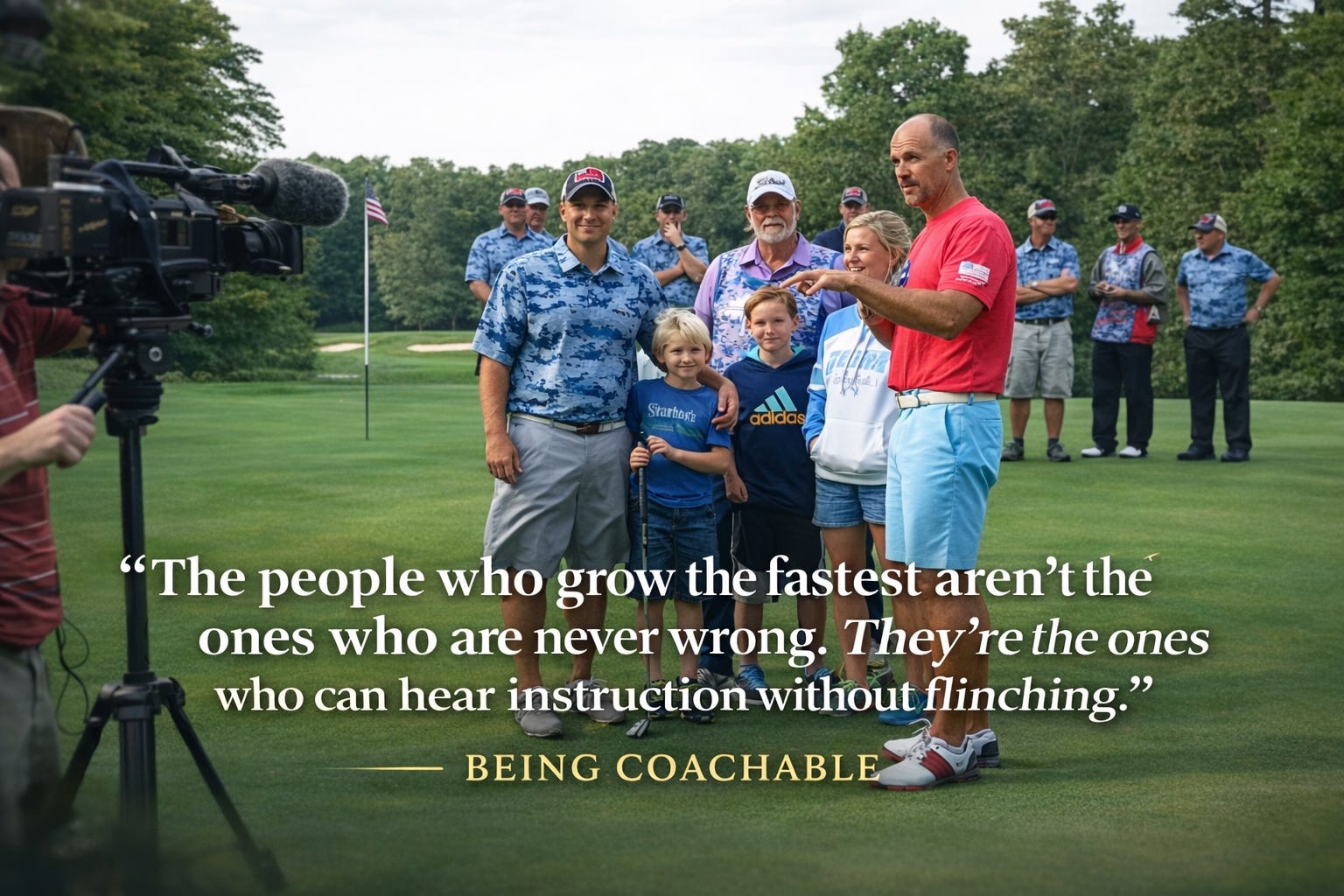
Whether it’s sports, business, leadership, or life, the pattern is the same. The people who grow the fastest aren’t the ones who are never wrong. They’re the ones who can hear instruction without flinching.
So the next time a coach, a leader, a mentor, or someone who cares about you offers feedback, pause before responding. Don’t rush to defend. Don’t explain it away. Don’t prove you already knew.
Just take it in.
You may not always get another chance to hear it.